Our university offers courses specifically on climate science and environmental sustainability. A notable example is our major in Renewable Energy Technology offered by the Applied Sciences Private University. This program focuses on the study of various renewable energy systems from an applied technical perspective, preparing students to contribute effectively to the field of sustainable energy.
Evidence of our commitment includes:
For a detailed overview of this major, please visit the following link: Renewable Energy Technology Overview.
Course Topics Include:
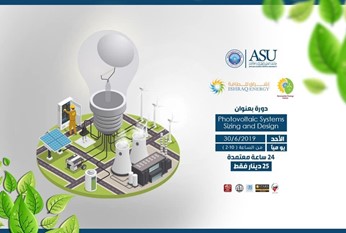
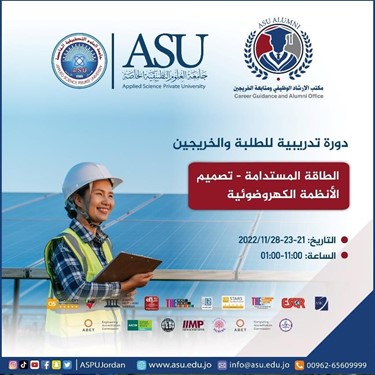
This course aims to equip students, professionals, and enthusiasts with the skills needed to design and implement efficient photovoltaic systems, contributing to the growth and efficiency of renewable energy usage in Jordan and beyond.
https://www.facebook.com/photo?fbid=2375284255866391&set=a.552527661475402

Course Overview: The training was designed to introduce participants to the fundamentals and advanced concepts of photovoltaic (PV) system design. It aimed to provide comprehensive knowledge on how to create efficient and sustainable energy solutions using solar power. This course is particularly valuable for those looking to enhance their expertise in renewable energy technologies and sustainable design practices.
Key Features of the Course Included:
This training course not only supports professional development in the renewable energy sector but also aligns with global trends towards sustainable development. By offering such educational
opportunities for free, ASU reinforces its role as a leader in advancing renewable energy knowledge and practices.

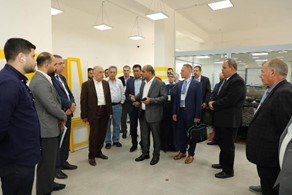
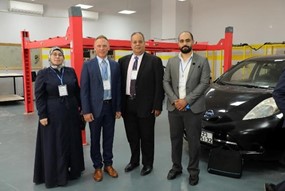
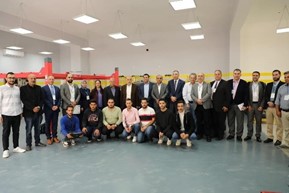
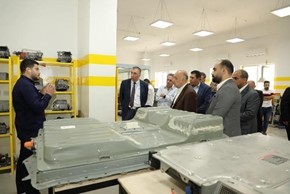
D.The Applied Science Private University (ASU) is actively participating in the Erasmus+ project alongside a consortium of Jordanian universities. This collaboration focuses on developing professional and academic programs centered on electric and hybrid cars, aligning with the global shift towards eco-friendly automotive solutions.
Project Overview: The initiative underscores the critical role of higher education in combating climate change through innovation. ASU’s engagement in the project involves the creation of various educational pathways, including training diplomas, higher diplomas, and technical engineering programs specifically tailored to the burgeoning field of electric and hybrid vehicles.
Interdisciplinary Collaboration: ASU’s eco car projects utilize an interdisciplinary approach, integrating expertise from engineering, environmental science, and design. This collaboration not only enhances the educational experience by providing practical, real-world applications for students but also fosters innovation in sustainable vehicle technologies.
International Training and Exposure: During the project, ASU’s “Eco Car Team” and students had the opportunity to engage in intensive practical training abroad. Participants traveled to partner countries within the European Union—Spain, Italy, and Germany—gaining hands-on experience and international perspectives on sustainable automotive technologies.
Contributions to Sustainable Transportation: These projects contribute significantly to advancing sustainable transportation solutions. They not only provide technical skills and theoretical knowledge but also raise awareness about the importance of eco-friendly transportation options. By doing so, they prepare a new generation of engineers, scientists, and policymakers to integrate environmental stewardship into their future careers.
Access to Resources: Additionally, during the project’s implementation, the Consulting and Training Center at ASU welcomed 27 training diploma students. These students, along with the university’s engineers, were granted access to the Eco Car project’s electronic platform, which includes lectures and recorded materials pertinent to the professional diploma.
In summary, ASU’s participation in the Erasmus+ project for electric and hybrid cars is a testament to the university’s commitment to innovation and sustainability in the automotive industry. This initiative not only enhances the academic offerings at ASU but also plays a crucial role in promoting sustainable development and environmental stewardship.